
The Real Bottleneck Isn’t Hiring. It’s Selection.
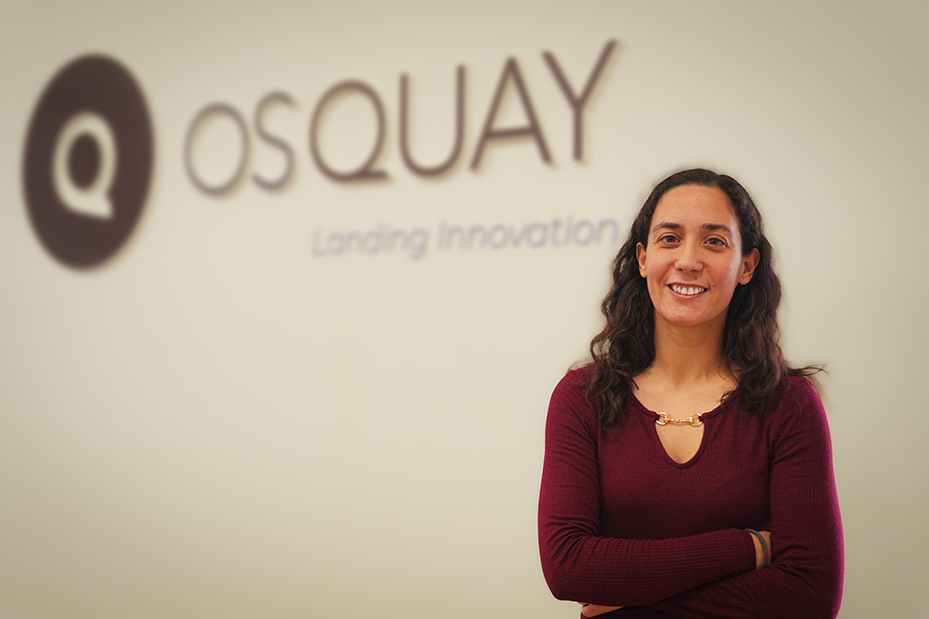
A conversation with Mariana Martins, Head of Team Augmentation, on why fit and context matter when scaling technology teams.
Technology teams often spend more time selecting profiles than actually integrating them.
In this conversation, Mariana Martins explains how a more focused, context-driven approach reduces friction and helps teams move forward with the right expertise from the start.
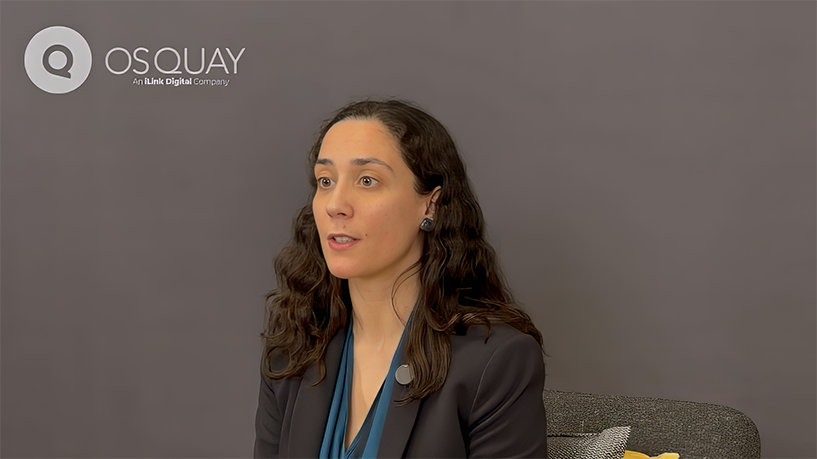
You can also watch the full conversation with Mariana Martins below.
Full interview with Mariana Martins, Head of Team Augmentation at OSQuay
Technology teams today don’t struggle to find candidates. They struggle to find the right fit.
That’s where most of the friction begins.
Mariana Martins, who leads Team Augmentation at OSQuay, sees this pattern consistently across clients. “Most companies receive a high volume of profiles, but many of them don’t really align with their context,” she says. “So instead of simplifying the process, it often creates more work internally.”
At the same time, delivery timelines remain tight. Teams are expected to keep moving forward while still trying to determine which profiles will actually work in practice. Increasingly, the bottleneck is no longer hiring. It is selection.
OSQuay’s approach is built around addressing that gap.
“Our approach is based on precision rather than volume,” Mariana explains. “We don’t believe in sending multiple profiles and hoping one works. We take the time upfront to understand what the client actually needs, not just technically, but also in terms of how the team operates and how delivery is structured.”
“Most companies aren’t short on candidates. They’re short on the right fit.”
That shift changes the dynamic of the process. Instead of reviewing large numbers of profiles, clients are presented with a small number of options that are already aligned with their environment.
“That allows us to bring in people who make sense from the start and can contribute immediately,” she adds.
This approach is particularly relevant in areas where the gap is hardest to fill. OSQuay supports clients with expertise across low-code development, data engineering, full-stack development, DevOps, cybersecurity, and domain-specific roles.
Domain experts, in particular, play a key role in accelerating delivery.
“Because they already understand the business context or the type of system, they don’t need a long ramp-up phase,” Martins says. “That makes a real difference in maintaining momentum, especially in complex projects.”
The contrast with traditional staffing models becomes clear in how selection is handled.
“A lot of providers will send as many profiles as possible and leave the filtering to the client,” she notes. “We do the opposite. We narrow it down first.”
The result is fewer options, but far more relevant ones, and a smoother integration into the team.
“We narrow the selection first, so the client doesn’t
have to.”
This model also allows companies to remain flexible. Teams can bring in specialized expertise when needed, without going through long hiring cycles or expanding permanent headcount.
“They can scale dynamically while still keeping full control over how their projects are delivered,” Mariana says.
In practice, that reduces friction across the entire process.
“Teams don’t have to spend time reviewing profiles or managing mismatches,” she explains. “They can focus on the work itself, which leads to more consistent progress.”
“Teams can focus on the work itself, not on filtering profiles.”
A recent project illustrates this clearly. In a financial and reporting context, the objective was to improve visibility into operations and assess potential risks across large volumes of data.
“The challenge wasn’t just technical,” Martins recalls. “It was about finding profiles that could operate in a context where business rules were constantly evolving and attention to detail was critical.”
By working closely with the client to understand both the technical requirements and the broader project environment, OSQuay presented a small number of highly aligned profiles. Those profiles smoothly integrated into the team and contributed to the continuity and stability of the work.
“It’s about having the right expertise, in the right context, at the right moment.”
This approach is particularly effective in scenarios that require rapid adaptation or highly specialized expertise.
“For example, modernization initiatives, data projects, or the launch of new platforms,” she says. “Situations where having the right capabilities at the right time is critical.”
The focus is not on increasing the number of candidates.
It is about making sure the people you bring in actually contribute from the start.
If you’re looking to scale your team with the right expertise, you can explore how we approach team augmentation here.
Like this article? Share it: